Hi there!
Today’s article is about, “Quick Tip for Families
in Intensive Care: My 71-Year-Old Brother's Come Off ECMO (Extracorporeal Membrane Oxygenation) After Aortic Arch Surgery After 11 Days, He's Not Waking Up!?”
You may also watch the video here on our website https://intensivecarehotline.com/blog/quick-tip-for-families-in-intensive-care-my-71-year-old-brothers-come-off-ecmo-extracorporeal-membrane-oxygenation-after-aortic-arch-surgery-after-11-days-hes-not-waking-up/ or you can continue reading the article below.
Hi, it’s Patrik Hutzel from intensivecarehotline.com with another quick tip for families in intensive care.
Today, I have an email from Regina who says,
“Hi Patrik,
My brother is 71. He’s 19 years post dissection of his aorta and he is now 11 days post repair of his aortic arch. He is off ECMO and the dialysis but slow to wake up, although there were signs yesterday of him following one or two questions by the nurses.
He’s in ICU. The team wants to meet with his family next Tuesday and I’m extremely worried that they may not want to continue treatment. What should I be doing or what should we be worried about?”
Well, Regina, that’s a really tricky situation for your brother. Well, the good news is he’s off ECMO (extracorporeal membrane oxygenation), and whether it was an aortic dissection 19 years ago or now an aortic arch repair, they are high-risk surgeries and people sometimes take weeks or months to recover. So, I’m not surprised that he ended up on ECMO. There probably would have been some complications during
surgery that his heart might have taken a hit.
The aorta by the way is the biggest vessel in the body, so all the blood that’s flowing through the body, most of that blood body is concentrated in the aorta. So, it’s quite a high-risk surgery to begin with. People often end up on ECMO during the surgery, but then also after surgery, which is what’s happening here, and then ECMO needs to be weaned off
while patients are in an induced coma. When patients are in an induced coma, there is a high risk of deconditioning. There’s a high risk of people sustaining neurological events such as stroke or seizures, but it’s good that you are saying he’s slowly waking up.
So, here’s what to look for. Alright, so if you are worried about the ICU team wanting to talk about end of life and wanting to withdraw treatment, number one, it’s good news that he’s off ECMO. ECMO is basically a bypass machine that takes over the function of the heart or the lungs temporarily. So, it’s good that he’s off ECMO, that means his heart must be working and must be beating. So that’s the good news. It’s also good that he’s off dialysis. Because if he was on dialysis, that means he would have been in kidney failure.
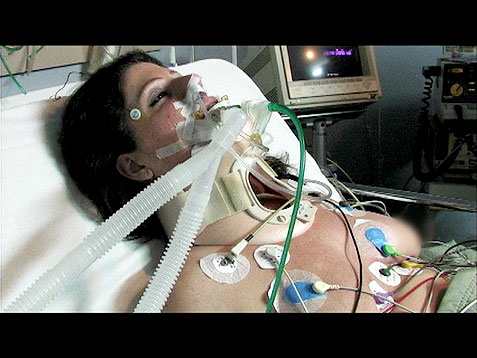
So, during all of that, he would have been in an induced coma, heavily sedated, probably with medication such as propofol, Precedex, or midazolam/Versed and also had opiates such as morphine or fentanyl while he was or still is ventilated with a breathing tube. When someone is ventilated with a breathing tube, they often end up in an induced coma and then he takes time for them to wake up. It’s good that he’s also following questions even though it’s very slowly.
So,
here’s what should happen next, he should be woken up and attempts need to be made to wean him off the ventilator, and that might be a reasonably slow process. If he can’t be weaned off the ventilator, assuming you and your
family and your brother want to continue, he might need a tracheostomy. Tracheostomy basically replaces the breathing tube in the mouth and goes into the neck and is another artificial airway that doesn’t most of the time require sedatives and opiates. So that would be a step forward.
Now, also with the aortic arch repair and with him being on ECMO, he might also still be on inotropes or vasopressors to support his heart. Without the inotropes or vasopressors, his heart might not sustain a physiological blood pressure that’s compatible with life. So therefore, he needs to be weaned off and come off those inotropes and vasopressors as well.
So, there’s probably quite a few steps he needs to go through. Other things that need to happen in a situation like that, probably an ultrasound of the heart/Echocardiogram, making sure the heart is beating, or even a CT (Computed Tomography)
or an MRI (Magnetic Resonance Imaging) scan of the heart and also the aorta, making sure there’s no leakage, everything is working fine there, and obviously, they need to keep a very close eye on his kidney function given that he was on dialysis and that he was in kidney failure.
Now, if all of that keeps moving in the right direction, then your brother should be able to wake up slowly over time. And also, over time, they should be able to start physical therapy slowly but gently mobilizing. It’s probably a little bit too early for that after everything that he’s been through but that would be an ideal scenario and an ideal outcome to
wean him off the ventilator, wean off the inotropes, avoid the tracheostomy ideally, and then he would need to go on to cardiac rehabilitation at some point. That would be an ideal scenario.
I’m not suggesting that getting there will be without any hurdles, there will probably be some hurdles here. But like I said, the most positive thing out of your email is that he’s off ECMO so that means his heart must be recovering and nothing’s going to happen if his heart isn’t recovering. Really, really good signs here overall, but I believe you and your family will need to be patient to get your brother from point A to point B and slowly
but surely get him on track here.
So that is my quick tip for today.
I have worked in critical care for nearly 25 years in three different countries where I worked as a nurse manager for over 5 years and where I’ve been consulting and advocating for families in intensive care all around the world since
2013 here at intensivecarehotline.com. We have been saving many lives with our consulting and advocacy and you can verify that on our testimonial section at intensivecarehotline.com, or you can also go to our podcast section at intensivecarehotline.com and you can listen to some client interviews and see what they say.
We get so many questions and emails every day from families in intensive care all around the world, that’s why we decided to create a membership for families of critically ill patients in intensive care so that we can help more people and more
families in intensive care, and you can become a member if you go to intensivecarehotline.com if you click on the membership link or you go to intensivecaresupport.org directly. In the membership, you have access to me and my team, 24 hours a day, in the
membership area and via email, and we answer all questions intensive care related.
In the membership, you also have exclusive access to 21 eBooks and 21 videos that I have personally written and recorded, and I share all my knowledge in intensive care that will help you to make informed decisions, have peace of mind, control, power, and influence, making sure your loved one gets best care and
treatment.
I also do one-on-one consulting and advocacy over the phone, Zoom, WhatsApp, Skype, whichever medium works best for you. I talk to you and your families directly. I talk to doctors and
nurses directly. I ask all the questions that you haven’t even considered asking but must be asked when you have a loved one in intensive care. I handhold you through the process, making sure you stay one step ahead of the intensive care team, making sure you manage intensive care team, so they don’t manage you. It’s a once in a lifetime situation that you simply can’t afford to get wrong.
I also represent you in family meetings
with intensive care teams. Once again, making sure you make informed decisions, have peace of mind, control, power, and influence, making sure your loved one gets best care and treatment.
We also do medical record
reviews in real time so that you can get a second opinion in real time. We also do medical record reviews after intensive care if you have unanswered questions, if you need closure, or if you are suspecting medical negligence.
All of that you get at intensivecarehotline.com. Call us on one of the numbers on the top of our
website or send us an email to support@intensivecarehotline.com with your questions.
If you like my videos, subscribe to my YouTube channel for regular updates for
families in intensive care. Click the like button, click the notification bell, comment below what you want to see next, what questions and insights you have, and share this video with your friends and families.
I also do a weekly YouTube live where I answer your questions live on the show and you will get notification for the YouTube live if you’re a subscriber to my YouTube channel or if you are a
subscriber to our email newsletter at intensivecarehotline.com.
If you want your video read and answered quickly, leave a small donation with the super chat button on YouTube or if you want to make a small donation, we appreciate that. I have so many emails sitting here and I’m only getting to one at the time, so by you making a small donation, I will read out your email very
quickly and get it answered very quickly. Every little helps so that we can make as many content and videos for families in intensive care and we can help as many families as possible.
Thank you so much for watching.
This is Patrik Hutzel from intensivecarehotline.com and I will talk to
you in a few days.
Take care for now.